Most UX process starts one step too late — after a concept has already been chosen. Blue-sky thinking is the step before that: an unconstrained look at the actual problem, before anything gets narrowed down.
It’s thinking without practical limits — budget, feasibility, “how things are usually done” — set aside on purpose, so ideas can be judged on merit before they’re judged on constraints. The point isn’t that every idea survives contact with reality; it’s that you generate a wide enough pool of genuinely different ideas that the good ones don’t get filtered out before they’re even considered.
In practice, that means questioning the brief itself, not just the solution; deliberately generating more ideas than feels comfortable; and holding off on feasibility questions until after an idea has been properly explored, not before.
At Career Foundry, I tutored students who each picked one of four project briefs — one was always a health app. Every single one opened the same way: “people are too busy and stressed.” Nobody questioned it, and nobody dug into why.
That’s exactly the kind of assumption blue-sky thinking is for. Being busy and stressed is a symptom — the more interesting question is what’s actually causing it, and whether the product should treat the symptom or the cause. For a remote worker, for instance, losing a commute can hand back two or three hours a day. What a design does with that time — and whether it even acknowledges it exists — is a genuinely different starting point than “reduce stress with reminders.”
Four patterns show up constantly in early-career UX, and all of them are easy to fix once you see them:
People won’t enter data they don’t have to. If a design asks time-poor users to log meals, workouts or moods manually, most of that data simply won’t get entered. Wearables, calendars and photos can supply most of it automatically — manual input should be for fine-tuning, not for setup.
Motivation isn’t one-size-fits-all. Gamification — badges, streaks, rewards — works brilliantly for some people and does nothing for others, who respond far better to a plain trend line or a comparison against their peer group. Age matters here too: a rising trend line suits someone building fitness from scratch, but for a user who’s naturally declining — managing a long-term condition in their 60s or 70s, say — a flat or falling line isn’t a failure, it’s real life, and it won’t motivate anyone. A comparison against others their age and type does the same motivational job without setting a bar nobody in that position could reach. User research is what tells you which group you’re actually designing for, not a personal assumption about what’s motivating.
Habits run on chemistry, not just willpower. The same reward loop that keeps people checking social media — a small, slightly unpredictable payoff for a small action — is what makes streaks, badges and milestone messages effective for building a habit too. Used deliberately, that’s a legitimate design tool: quick, honest feedback right after a real action, rather than something manufactured to create urgency.
Health compounds day by day, not in long-term averages. Today is shaped most by yesterday, still meaningfully by the past week, and only lightly by anything from years back — but every day still adds to the total. That’s why the strongest health products keep the focus on “what to do right now” rather than a distant average the user has no way to act on.
AI is a fast way to stress-test an idea once you already have a strong, specific question to ask it. Asking an AI model how dopamine and user-flow design interact in a fitness app, for example, surfaces useful, specific mechanisms — milestone feedback, social proof, personalisation — that are easy to miss when designing from memory alone.
What it doesn’t do is choose the right problem to solve. That still takes research, domain knowledge, and judgement about which of the ten plausible ideas is actually the right one. AI is a fast way to widen the pool, not a replacement for picking from it.
A user who exercises most weekdays around 10am, wears a smartwatch, and prefers vegan food.
App: You jogged 5km in 36 minutes — how did it go? User: I kept stopping to stretch, my hamstrings were tight. App: Try this hip and hamstring session tomorrow, then jog again the day after. Your trainers are also two years old — worth logging a new pair here.
User taps “Trend lines.”
App: Keep up 3 x 5km runs, 2 x 30-minute yoga sessions and one 2-hour bike ride a week, and you’ll be carrying 2% less body fat within a month — with cardio fitness around 70% above the average for your age group.
App: A brunch of orange juice, dried fruit muesli, fruit salad, vegan yoghurt and cinnamon would balance out today’s intake well — or tap here for other options. User photographs their actual breakfast and uploads it instead.
Almost none of this needed the user to type anything. Every suggestion comes from data the app already had, plus one honest check-in. That’s the standard worth designing towards — not more screens for the user to fill in, but fewer they ever need to.
This is what real UX is about — not an interface bolted on top of an unquestioned brief.
If you’d like a second pair of eyes on a brief or a project, I offer 1:1 sessions for exactly this kind of thinking.
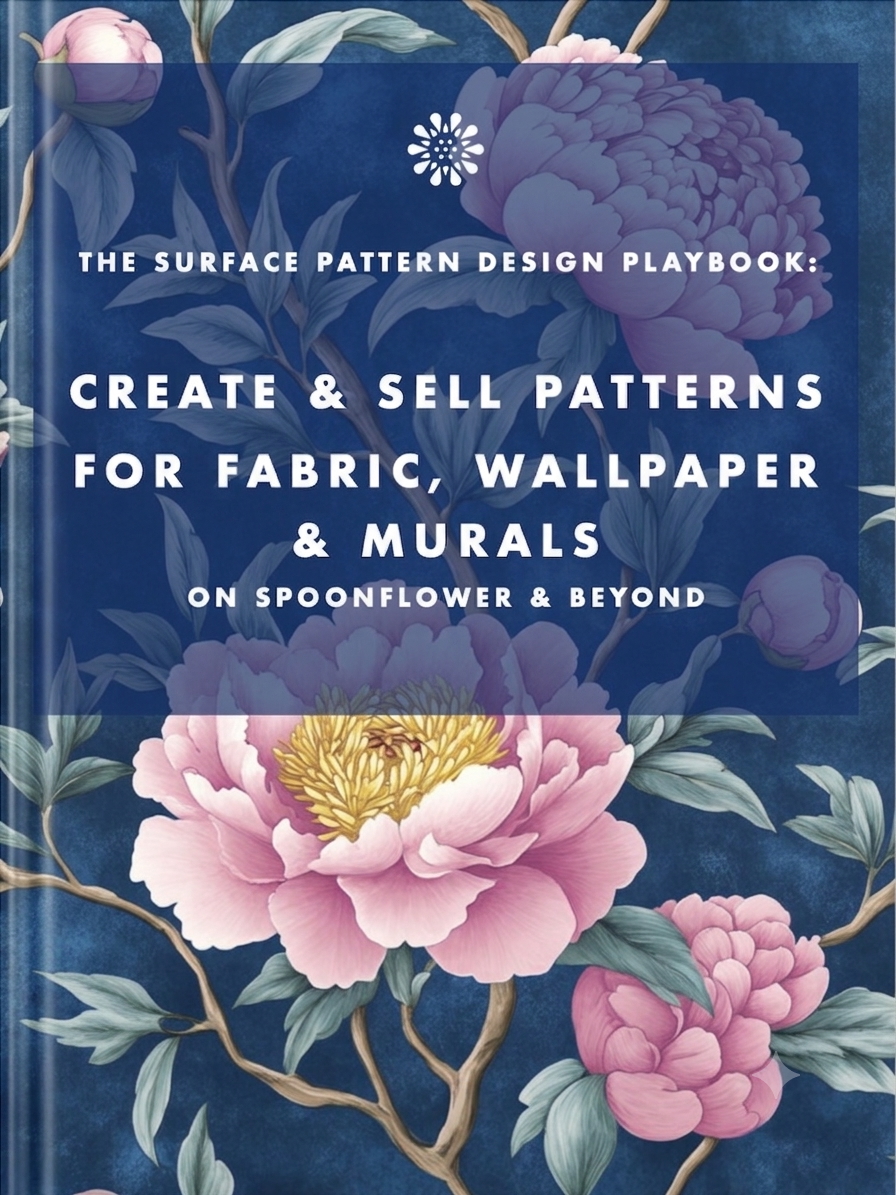
Earn from your design skills
Create & sell patterns for fabric, wallpaper & murals — on Spoonflower & beyond. Client-free, commute-free, creative work you can do from anywhere.
See the book →
"That makes total sense! Out of curiosity…" are typical sentence snippets in your messages if you're talking to a bot.

A real look at how I use Claude Code, Claude Cowork, Figma and more to design, build and market TickLists, my websites and my Spoonflower patterns, solo.

Job seekers who keep running the old employment playbook are playing a game whose rules have already changed. Here's what's happening in the design job market, and why leverage, not talent, is what separates who's finding traction.
Keep your design skills up to date with videos,
AI workflows, tutorials, ways to earn $$$ and free resources.
See past email newsletters.
Unsubscribe anytime.